
Your basement’s basically a storage unit right now, isn’t it?
Boxes from three moves ago. Holiday decorations. That exercise equipment you bought with good intentions. Maybe your water heater and furnace sitting there humming away. And about 800 square feet of potential that you walk past every time you do laundry.
I’ve been finishing basements in Gaithersburg and all over Montgomery County for years, and the conversation usually starts the same way. “We really should do something with the basement.” Then comes the pause. “But I don’t even know where to start.”
Here’s the thing. That basement represents probably the cheapest square footage you’ll ever add to your house. You’ve already got the foundation, the roof over it, the walls around it. You just need to turn it into actual living space instead of a glorified storage locker.
Let me walk you through some ideas I’ve actually built. Not Pinterest fantasy basements, but real spaces in real Gaithersburg homes that people use every single day.
What You’re Working With
Most basements in Gaithersburg—especially in houses built from the ’70s through early 2000s—have some pretty consistent characteristics.
Ceiling height’s usually 7 to 8 feet. Newer homes might have 9 feet if you’re lucky. It’s enough to work with, but you’re not going to want to drop the ceiling more than you have to.
The foundation’s either poured concrete or concrete block. Both work fine, but they each have their own quirks when it comes to finishing.
And then there are the challenges nobody likes to talk about. Moisture’s the big one in Maryland basements. Low natural light because you’re underground. All your mechanicals—furnace, water heater, electrical panel—sitting right where you want to put your new family room.
But the size is what gets people excited. Most Gaithersburg basements give you 800 to 1,500 square feet of potential space. That’s huge. That’s like adding a whole second living area to your house.
The Entertainment Hub Everyone Wants
This is far and away the most popular basement we build.
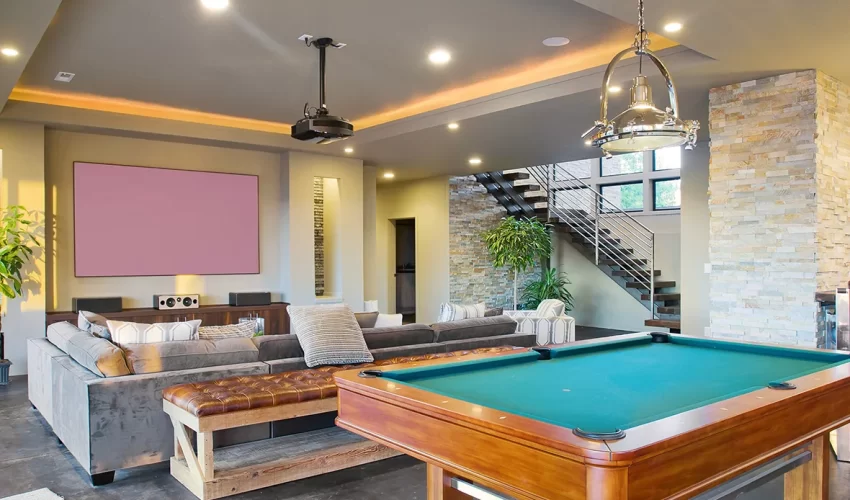
You’ve got your big screen setup on one wall—could be a projector and screen, could just be a massive TV. Comfortable seating that’s actually made for watching movies, not looking pretty. A gaming area with storage for all the consoles and controllers and whatever else accumulates. Maybe a wet bar with a mini fridge and some counter space. Built-in shelving for all your media stuff.
One client in Germantown wanted to go all out. We soundproofed the whole space, put in theater seating with cupholders, added LED strips that dim when you start a movie. His teenage kids basically live down there now.
For a basement like this, you’re probably looking at $35,000 to $65,000 depending on how fancy you get with it. The soundproofing adds cost but makes a real difference. Same with good lighting—you want dimmers and maybe some scene controls so you can set different moods.
Dark paint colors work great down here because you’re trying to reduce glare on screens anyway. Carpet or area rugs help with sound absorption. And make sure you’ve got enough electrical outlets because these spaces accumulate devices like crazy.
The Home Office That Actually Works
COVID changed everything with home offices. Suddenly everyone needed a real workspace, not just a laptop at the kitchen table.
A finished basement gives you dedicated office space with actual separation from the household chaos upstairs. We typically build in a proper desk area with good lighting, add some shelving or cabinets for files and supplies, make sure there’s strong Wi-Fi connectivity down there, and include enough outlets and data ports.
The smart move? If you’ve got the space, add a bedroom with an egress window and a bathroom. Now you’ve got a home office that doubles as a guest suite when family visits. That’s the setup we did for a client in Clarksburg who works from home full-time but has parents who visit twice a year.
You need good lighting for an office basement because natural light’s limited. We usually put in plenty of recessed cans plus task lighting at the desk. Climate control’s important too—you’re going to be down there all day, so it needs to be comfortable year-round.
For a setup like this, you’re talking $50,000 to $85,000 depending on whether you’re adding a full bathroom or just a half bath, and how elaborate the office built-ins are.
The Home Gym I Wish I Had
Gym memberships are expensive and you’ve got to drive there. Having a home gym in your basement means you actually use it.
We put down rubber flooring or foam tiles that can handle dropped weights. Mount mirrors on one wall so you can check your form. Set up a TV for workout videos or just to make the treadmill less boring. Create storage for all the weights, yoga mats, resistance bands, whatever equipment you use.
If there’s room and budget, adding a bathroom with a shower means you can work out and clean up without traipsing through the house all sweaty.
The flooring’s important—you need something that’ll support the weight and won’t get destroyed when (not if) you drop something. The subfloor might need reinforcement depending on what equipment you’re planning.
Most home gym basements run $30,000 to $60,000. Add another $15,000 to $25,000 if you’re putting in a full bathroom. More if you want to get fancy with a sauna, which some people do.
The Mother-In-Law Suite
Maryland’s expensive. Multi-generational living is becoming way more common because it makes financial sense.
These basement suites need a real bedroom with a proper egress window (that’s code, not optional), a full bathroom with a walk-in shower, some kind of kitchenette situation—sink, microwave, mini fridge, maybe a cooktop if you’re going all out. A living area with enough space to not feel like you’re in a prison cell.
We did one in Gaithersburg last year for a couple whose dad was moving in with them. Separate entrance from the side of the house so he could come and go without feeling like he had to check in. Full kitchen setup because he likes to cook. His own thermostat so he could keep it whatever temperature he wanted.
The egress window is non-negotiable if you’re calling it a bedroom. Fire safety code requires it, and honestly, you want it for emergency exit anyway. The window wells add cost but they’re necessary.
These run $60,000 to $100,000 easily, more if you’re doing a full kitchen instead of just a kitchenette. But compared to paying for assisted living or a separate apartment? It pays for itself pretty quick.
The Playroom That Saves Your Upstairs
Kids and their stuff take over a house. A basement playroom contains the chaos.
Durable flooring that can handle spills and rough play—usually luxury vinyl plank. Storage, storage, and more storage for toys and games and craft supplies. Maybe a craft table with a surface you can actually clean. A reading nook with some comfy seating. Washable paint or even tile wainscoting on the lower walls because kids are basically destructive forces of nature.
One family in Rockville went all in and added a half bath down there too, so the kids didn’t have to run upstairs every time. Smart move.
The key is designing it so you can repurpose the space later when the kids outgrow it. Built-in storage is great but keep it flexible. Same with the layout—you want something that could become an office or guest room or whatever in ten years.
These usually run $25,000 to $45,000 depending on how elaborate you get with the built-ins and whether you add a bathroom.
The Fancy Bar Setup
If you’re into wine or just like entertaining, a basement bar can be pretty sweet.
Custom bar with seating for four to six people. Bar sink and beverage fridge. Maybe a wine fridge or even a climate-controlled wine room if you’re serious about it. Display cabinets for glasses and bottles. Good lighting—pendant lights over the bar, under-cabinet lighting, the works.
I did one in Potomac that had a full wine cellar behind glass walls, tasting area, the whole nine yards. That was a $80,000 basement, but it was basically a private wine bar.
For most people, a nice bar area runs $40,000 to $60,000. The plumbing for the sink adds cost. Climate-controlled wine storage adds more. But if you entertain a lot, it’s a feature people remember.
What Every Basement Needs, No Matter What
Moisture control comes first. Before we finish anything, we need to make sure water isn’t going to be a problem.
If your basement has moisture issues—and a lot of them do—we deal with that first. Proper waterproofing, maybe a sump pump, definitely a dehumidifier system. Vapor barriers on the walls and under the flooring. If we skip this step, everything we build will be ruined within a few years.
Ceiling height’s tricky because you’re already starting at 7 or 8 feet. We usually do either an open ceiling—paint all the joists and mechanicals one color—or a drop ceiling with the maximum clearance we can get. Low-profile lighting helps. No chandeliers or anything that hangs down and makes the space feel shorter.
Natural light’s limited because you’re underground, so we maximize what we can get. Egress windows help. Glass block windows give you light without sacrificing privacy. Light paint colors on everything. And then lots of good artificial lighting—recessed cans, maybe some wall sconces, under-cabinet lighting if there are built-ins.
HVAC is crucial. Basements need heating and cooling just like the rest of the house. We usually extend your existing system or add a separate zone. A dehumidifier that ties into your HVAC keeps things comfortable year-round.
Flooring has to be basement-appropriate. Luxury vinyl plank is probably the most popular choice—looks good, completely waterproof, feels warmer than tile. Tile works great too. Engineered hardwood if you really want that wood look. Carpet tiles if you want something soft underfoot but want the ability to replace sections if water ever gets in.
Solid hardwood? No. Laminate? Absolutely not. Both of them hate moisture and basements have moisture, even when we do everything right.
The Permit Situation
You need permits for basement finishing in Montgomery County. Building permit, electrical permit, plumbing permit if you’re adding a bathroom or wet bar.
Montgomery County or your city (if you’re in Gaithersburg or Rockville proper) handles the building and electrical permits. WSSC handles plumbing regardless of where you live.
The permits add a few weeks to your timeline but they’re not optional. And honestly, you want the inspections. They make sure everything’s built to code and safe.
Bedrooms must have egress windows meeting specific size requirements—5.7 square feet of opening, certain minimum dimensions. Ceiling height has to be at least 7 feet for living spaces. Electrical needs to meet current code with GFCI protection in bathrooms and near any sinks.
We handle all this stuff, but I mention it so you know it’s part of the process.
Dealing With Moisture (Because You Have To)
Never, ever finish a basement that has moisture problems. Fix the moisture first, then finish.
Signs of trouble: white powder on the concrete (efflorescence), musty smell, visible dampness, mold growing anywhere, water stains, rust on metal.
Solutions range from exterior waterproofing (expensive but most effective) to interior drainage systems with sump pumps (cheaper, still works well) to sealing and coating (helps with minor issues) to dehumidification (manages ambient humidity).
I will not finish a basement with active moisture problems. Neither should anyone else. It’s throwing money away and creating potential health hazards.
How Long This Takes
Design and planning: 2-4 weeks. We measure, you decide what you want, we work out the details, we submit for permits.
Permits: 2-4 weeks usually, sometimes longer if the plan is complicated or the county’s backed up.
Construction: 6-12 weeks depending on size and complexity. Framing and running electrical/plumbing takes a couple weeks. Drywall and finish work takes a few more. Flooring, trim, painting, all the final details.
Start to finish, figure 3-5 months from your first call to moving furniture in.
What You’ll Get Back
A finished basement adds real value to your house. Not dollar-for-dollar, but you’ll recoup maybe 60-75% of your investment when you sell.
But again, that’s not really the point. The point is you’re getting 800 to 1,500 square feet of living space for way less than an addition would cost. And you’re using space you already have instead of building new.
In Gaithersburg’s real estate market, finished basements absolutely help homes sell. Buyers want that extra space, and they’re willing to pay for it.
Making the Budget Work
You can phase the project if you need to. Finish the main space now, add the bathroom later. Do the basics this year, add the fancy built-ins next year.
Choose cost-effective finishes. Luxury vinyl plank instead of tile. Paint-grade trim instead of stained wood. Stock cabinets instead of custom. You can still get a great-looking basement without maxing out your budget.
Keep plumbing simple. Bathrooms are expensive. Putting one close to existing plumbing costs way less than running all new pipes across the basement.
Your Basement Could Be Different in Three Months
Right now it’s a storage room. In three or four months, it could be your favorite space in the house.
I’ve seen it happen over and over. People finish their basements and suddenly that’s where everyone wants to hang out. The kids are down there instead of destroying the living room. You’ve got a proper home office instead of working from the dining table. Guests actually have a real place to stay when they visit.
We’ve finished enough Gaithersburg basements that we know what works, what doesn’t, and what problems to look for before we start. We know the permit process, we know how to handle moisture issues, and we know how to make the most of the space you’ve got.
Call us at 240-449-5164. Let’s talk about what you want to do with that basement and figure out how to make it happen.