
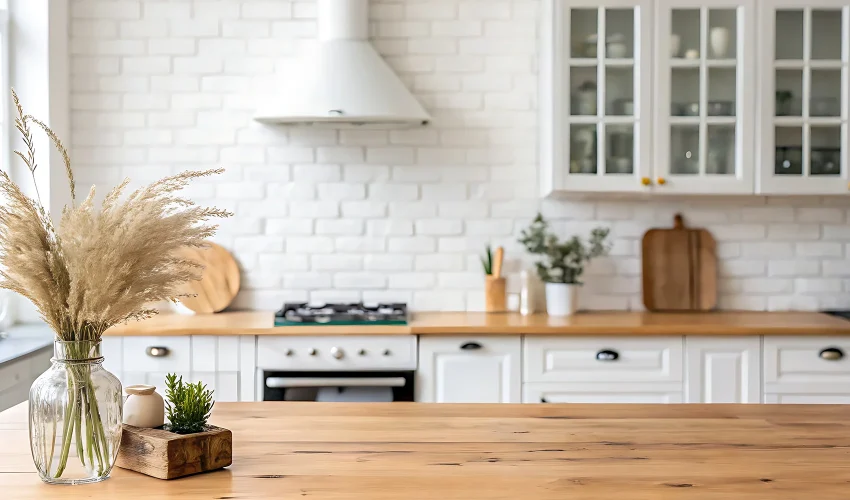
Farmhouse style fits naturally in Clarksburg and Darnestown.
These areas still have that rural character—bigger lots, trees, space between houses. A farmhouse kitchen just makes sense with the setting.
But here’s the thing about farmhouse kitchens: there’s authentic farmhouse and there’s “modern farmhouse,” and they’re pretty different animals. You need to figure out which direction you want to go.
What Makes a Kitchen “Farmhouse”
Traditional farmhouse style came from actual working farmhouses. Practical, durable materials. Simple designs that prioritized function. Nothing fancy because farmers didn’t have money for fancy.
Shaker-style cabinets with clean lines. Big farmhouse sinks. Wood surfaces. Open shelving because upper cabinets were expensive. Natural materials throughout.
Modern farmhouse keeps that aesthetic but adds contemporary conveniences and cleaner lines. It’s the Instagram version—inspired by farmhouses but built for people who’ve never milked a cow.
Both are valid. Just know what you’re going for.
The Farmhouse Sink (The Star of the Show)
If there’s one defining feature of a farmhouse kitchen, it’s the apron-front sink.
These sinks have the front panel exposed instead of hidden behind a cabinet face. Usually white fireclay or porcelain, though you can get them in other colors and materials now.
30 to 36 inches wide typically. Deep enough to fit big pots and roasting pans. Some are single bowl, some have a divider.
The sink itself runs $400-2,000 depending on size and quality. Installation adds another $500-1,000 because they require special cabinet bases and usually some custom carpentry.
I installed one in a Darnestown kitchen last year—36-inch white fireclay. The homeowner was terrified she’d crack it. Three years later it still looks brand new. They’re tougher than people think.
Shaker Cabinets (The Foundation)
Shaker-style cabinets are basically the definition of farmhouse cabinetry.
Simple five-piece doors with flat panels. No fancy details or carvings. Clean, straightforward, timeless.
You see them painted white or cream mostly, but sage green and navy blue have gotten really popular. Natural wood works too, especially if you’re going for authentic farmhouse rather than modern.
Stock shaker cabinets start around $8,000 for a decent-sized kitchen. Semi-custom gets you more size options and better quality, $12,000-20,000. Custom if you want specific dimensions or details, $20,000+.
The beauty of shakers is they work with almost any style. Paint them white and they’re modern farmhouse. Do them in natural cherry and they lean traditional. Navy blue and they’re transitional.
Butcher Block Counters (Warm and Practical)
Wood countertops bring warmth that stone just can’t match.
Butcher block is the classic choice for farmhouse kitchens. Maple, walnut, cherry—all work. Some people do the whole kitchen in butcher block. Others just use it for the island and go with stone for the perimeter.
You can cut directly on butcher block, which is actually pretty convenient. Scratches and dents sand out. You can refinish it yourself if it ever looks beat up.
Downside is maintenance. You’ve got to oil it regularly—monthly at first, then every few months once it’s seasoned. Water can damage it if you’re not careful. Heat too, though hot pans on a cutting board makes sense anyway.
Runs $40-100 per square foot installed.
I see a lot of people do butcher block islands with quartz perimeter counters. Best of both worlds—warm wood where you prep, durable stone where you might set hot pots.
Open Shelving (Controversial but Classic)
Traditional farmhouses had open shelving because upper cabinets were expensive.
Modern farmhouse kitchens use open shelves to display pretty dishes and create visual interest. Usually just one section—maybe flanking a window or on either side of the range.
People either love open shelving or hate it. Lovers say it makes the kitchen feel more open and forces you to keep things organized. Haters say it’s dust-collecting clutter that you have to keep perfect all the time.
I’m neutral. If you like the look and you’re realistic about maintaining it, go for it. If you need the storage and don’t want to dust dishes, stick with cabinets.
Floating shelves run $100-300 per set depending on size and material. Bracket-mounted shelves are $150-500.
The Backsplash Choice
Classic farmhouse backsplash is white subway tile. 3×6 inch ceramic tiles in a brick pattern, white or off-white, with white or light gray grout.
It’s timeless, it’s relatively inexpensive, and it works with everything.
Some people go with handmade or artisan tiles for more character and variation. Others do stacked (straight) pattern instead of offset. Some use darker grout for contrast.
Standard subway tile installation runs $10-20 per square foot. Handmade tiles bump that to $20-30+.
Other options: beadboard painted white, shiplap, or even just painted drywall if you’re going more minimal.
Colors and Finishes
Classic farmhouse is all white or cream. White cabinets, white subway tile, white farmhouse sink, butcher block or white marble counters.
Modern farmhouse adds more color. Navy or sage green islands, black hardware, natural wood accents, warmer whites and creams.
Hardware tends toward simple: cup pulls, bin pulls, simple knobs. Oil-rubbed bronze or matte black are popular finishes. Some people go with unlacquered brass that develops a patina over time.
Avoid anything too ornate or shiny. Farmhouse style is about simplicity.
The Range Hood Situation
A custom range hood makes a big impact in farmhouse kitchens.
Traditional is a wood surround painted white that hides the actual vent hood inside. Makes the hood look like a piece of furniture instead of an appliance.
These hoods run $2,000-8,000 depending on size and detail level. You can DIY a simple one if you’re handy, but most people hire it out.
Alternatively, a copper hood or hammered metal hood works for a more rustic look. Or even just a good-looking commercial-style hood if you’re keeping things simple.
Lighting That Fits the Style
Farmhouse lighting tends toward simple industrial or vintage-inspired fixtures.
Pendant lights over the island—often in oil-rubbed bronze or matte black. Maybe schoolhouse-style glass shades, or metal barn lights, or simple dome pendants.
Avoid anything too modern or sleek. Also avoid crystal chandeliers or anything too ornate—wrong vibe entirely.
Figure $200-600 per fixture for quality pieces.
What This Costs
Budget farmhouse kitchen in Clarksburg: $20,000-35,000
- Paint existing cabinets white or reface them
- Butcher block counters or affordable quartz
- Farmhouse sink
- Subway tile backsplash
- New hardware and fixtures
- Maybe add some open shelving
Mid-range: $35,000-65,000
- New shaker cabinets
- Mix of butcher block and stone counters
- Custom range hood
- Quality appliances
- Better lighting
- Hardwood or quality LVP floors
High-end: $65,000-100,000+
- Custom cabinetry
- Premium materials
- High-end appliances
- Walk-in pantry with barn door
- All the details done right
The Authentic vs. Modern Question
Authentic farmhouse uses reclaimed materials, shows age and wear, has imperfections that add character. It’s rustic, it’s a little rough around the edges, it feels genuine.
Modern farmhouse is cleaner, more refined, Instagram-ready. New materials made to look old-ish. Everything’s a little too perfect to feel truly authentic.
Neither is right or wrong. Just different approaches to the same general style.
Most Clarksburg and Darnestown kitchens I do land somewhere in the middle. Modern conveniences and clean execution, but with enough authentic touches to feel real.
DIY vs. Hiring Out
Some farmhouse elements are DIY-friendly if you’re handy.
Open shelving installation is straightforward. Painting cabinets is doable but tedious—proper prep is everything. Adding a barn door to a pantry is a weekend project.
But hire out the skilled stuff. Cabinet installation needs to be perfect or doors won’t close right. Countertop fabrication and installation requires specialty tools. Tile work looks easy but doing it well takes practice. Plumbing the farmhouse sink isn’t complicated but you want it done right.
Getting the mix right—DIY the easy stuff, hire the hard stuff—can save money without compromising quality.
Making It Work Long-Term
Farmhouse style has been around forever and it’s not going anywhere. It’s one of the safer style choices if you’re worried about trends.
But keep it somewhat neutral. All white with wood accents ages better than trendy colors. Classic subway tile outlasts whatever’s hot on Instagram right now.
You can always add trendier elements through accessories, lighting, and small details. Those are easy to change later.
Ready for a farmhouse kitchen in your Clarksburg or Darnestown home? Call us at 240-449-5164.